Hydraulics are where most equipment downtime starts
Almost everything a modern machine does goes through hydraulics: the loader arms, the three-point hitch, the boom and bucket, the steering, the brakes on many machines, and the drive itself on hydrostatic equipment. When the hydraulics are weak, the machine is useless even if the engine runs perfectly.
The expensive mistake is replacing parts on a guess. A slow loader can be a worn pump, but it can also be a stuck relief valve, a collapsed suction hose, a clogged filter or a cylinder bypassing internally. Our mechanics hook up pressure gauges and, when needed, a flow meter, and find which one it is before anything is ordered.
Signs your hydraulic system needs attention
- Slow or weak functions that get worse as the oil warms up. Classic sign of internal leakage in a pump, valve or cylinder.
- A whine or howl from the pump. Often cavitation from a restricted suction line, low oil or the wrong oil, and it destroys pumps fast.
- A cylinder that drifts down with the lever in neutral. Usually piston seals or a leaking load-holding valve.
- Foamy or milky oil. Air or water in the system. Water ruins pumps and valves, so it needs to be dealt with, not topped off.
- Overheating hydraulic oil. A relief valve dumping over all the time, a plugged cooler or a pump working against a restriction.
- Leaks and wet hoses. A weeping fitting today can be a burst hose and an empty tank tomorrow.
What we do in the field
- Hose and fitting replacement. Our service trucks can make up many common hydraulic hoses on site, or we source the exact hose from the nearest supplier.
- Pressure and flow testing of pumps, relief valves and circuits to pin down the failed component.
- Cylinder repair. Reseal on site when practical, or pull the cylinder for a rod, tube or seal job in the shop.
- Pump and motor replacement including hydrostatic drive pumps and wheel motors, with the system flushed so the new part is not killed by the old contamination.
- Control valve and joystick faults including electro-hydraulic valves where the fault is a coil, a connector or a controller signal.
- Contamination clean-up. Filter changes, oil sampling and flushing after a pump failure.
Fix it in the field or take it in?
Hoses, fittings, seals, filters, relief valve adjustments, most valve and sensor work, and many pump swaps on smaller machines are done where the machine stands. A pump or motor that has to be bench tested, a cylinder that needs a new rod or tube, or a failure that sent metal through the whole system is better done in a shop. We tell you which it is after testing, not before.
Questions people ask us
My loader is slow only when it gets hot. What is wrong?
That pattern points to internal leakage: as the oil thins with heat, it slips past worn parts in the pump, the relief valve or a cylinder. A pressure and flow test under load tells which one. Replacing the pump without testing is the most common expensive mistake.
Can you make a hydraulic hose in the field?
Often yes. Many of our mechanics carry hose and a crimper for common sizes. For special hoses we get the part from the nearest supplier. Bring us the old hose or a photo of the fittings when you call.
How much does a hydraulic pump replacement cost on equipment?
It depends heavily on the machine. A gear pump on a compact tractor is a very different job from a piston pump or a hydrostatic drive pump on a large loader. We diagnose first, then give you a written estimate with parts and labor before anything is ordered.
Is milky hydraulic oil a big problem?
It means water is in the system. Water causes rust, breaks down the oil and wears pumps and valves, so the oil should be changed and the source found: often a leaking cooler, condensation or a bad seal or breather.
Do you work on hydrostatic drives?
Yes. Loss of drive, slow travel one direction, overheating or a whining hydrostatic unit are diagnosed with charge and drive pressure tests before parts are replaced.
Real calls we handled
Written up from real calls to our dispatch line. Names, phone numbers and exact locations are left out.
Why does my Volvo D13 engine start, run for two minutes, and then shut off?
Volvo D13 · 2026-11When a Volvo D13 engine starts up, runs for roughly two minutes, and then dies, it is usually caused by fuel starvation or air entering the fuel supply system. A broken or cracked diesel fuel line allows air to get drawn into the low-pressure fuel circuit, re…
Why does my Volvo VNL D13 keep throwing or snapping the alternator serpentine belt?
Volvo VNL Volvo D13 · 2026-11When a Volvo VNL with a D13 engine throws or snaps a serpentine belt, simply slapping on a replacement belt will usually result in another shredded belt within miles. The most common cause is a failing belt tensioner or idler pulley assembly. Over time, inter…
Why won't my automatic Freightliner Cascadia crank even though the battery shows 14 volts and the dash says shift to neutral?
Freightliner Cascadia · 2026-11When an automatic Freightliner Cascadia displays a neutral lockout warning on the dash and refuses to crank despite showing 14 volts on the battery gauge, the starter motor is usually the primary suspect. On automated manual transmissions, the control module …
Related work
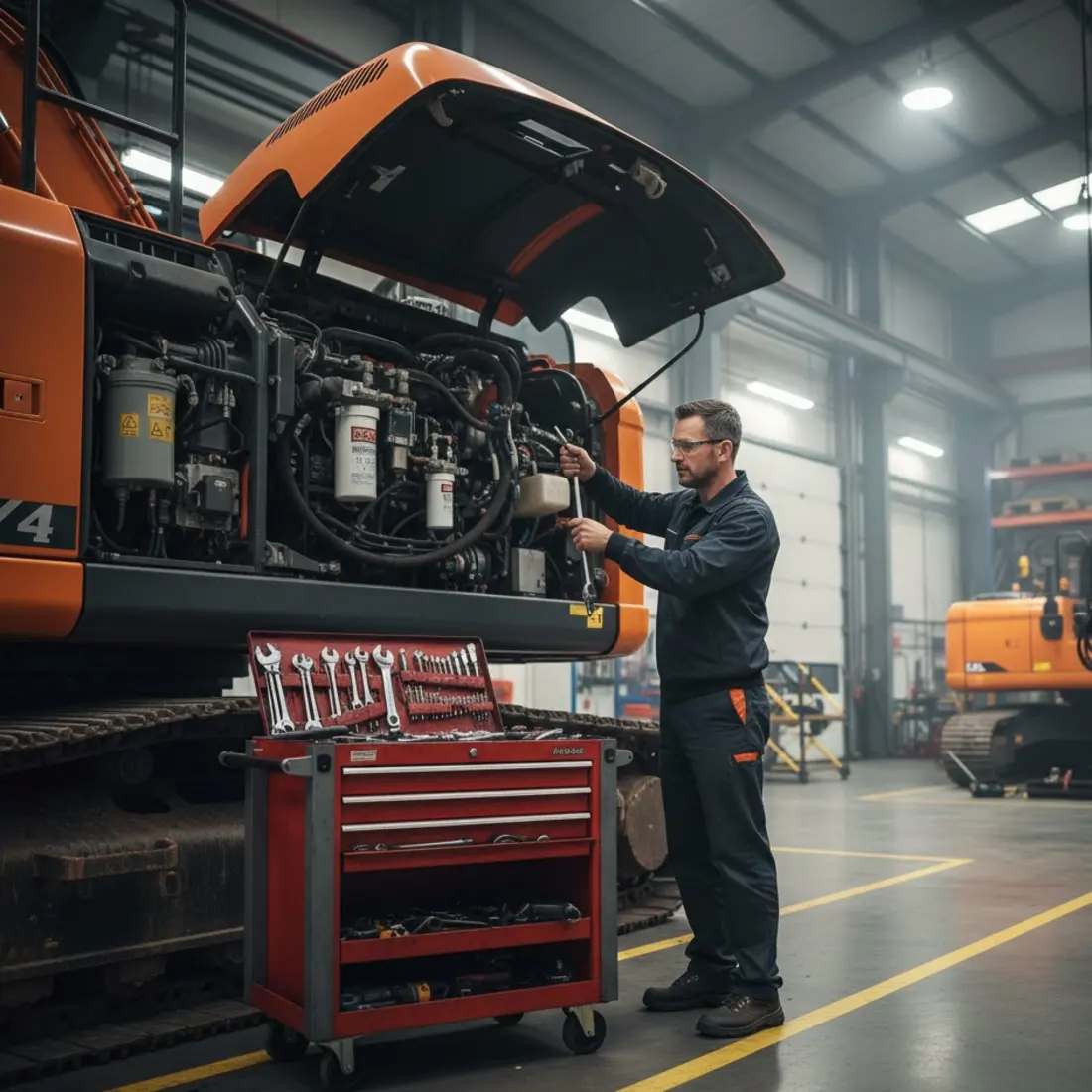 Construction equipmentExcavators, loaders, dozers, backhoes, skid steers and telehandlers on the jobsite.
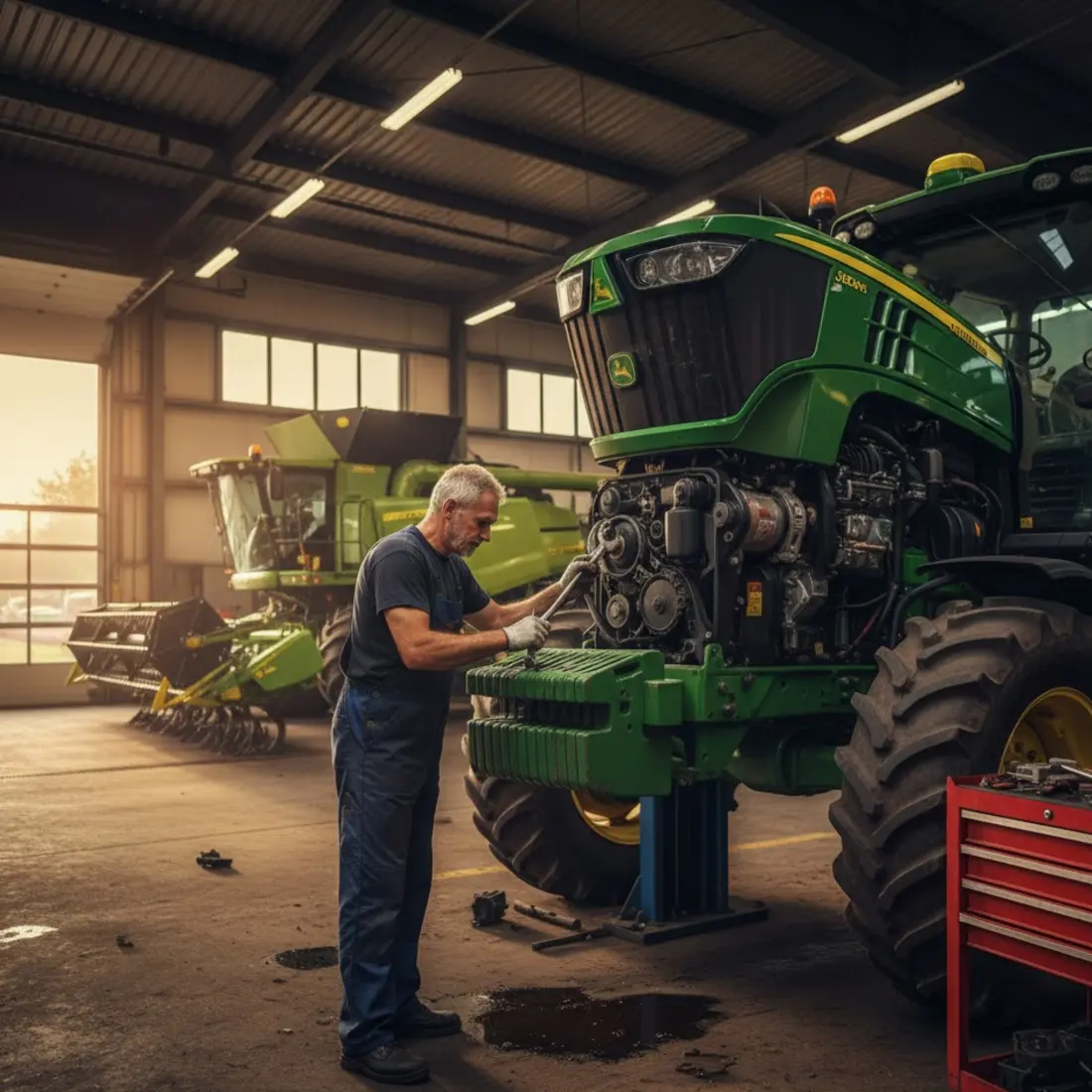 Farm tractorsRow-crop, utility and 4WD tractors: in the field, at the barn or at the shop.
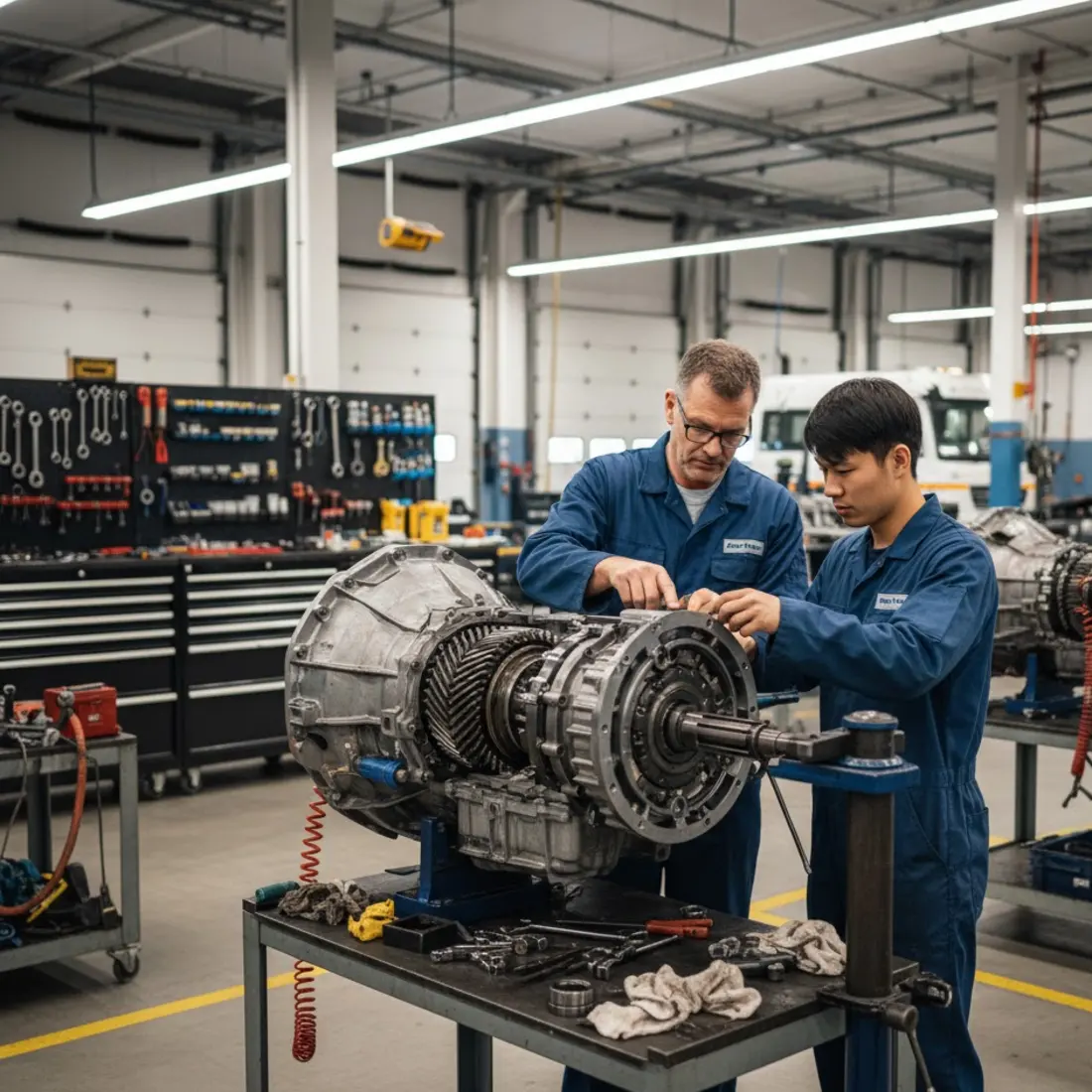 Transmissions & final drivesPowershift, IVT/CVT, hydrostatic drives, axles and final drives.